 Fat Gone
Audit available time before choosing a target
Write down your fixed commitments and the periods that are genuinely available. A day with a long commute may need a shorter session than a quiet weekend. Choose activities you can access without relying on an uncertain route, extra equipment or someone else’s availability.
Do not start by dividing an ambitious calorie number into seven identical days. Time, energy and surroundings vary. A workable plan can have different activities and durations while still giving you a clear next action on each day.
Define an action for each planned session
For every slot, note the activity, expected duration and starting cue. For example: a fifteen-minute walk after lunch on Monday, a household task on Wednesday and a ride on Saturday. A cue tied to an existing event avoids leaving the session to an unspecified later time.
The example schedule below illustrates organization, not a health recommendation or a complete exercise program. It does not prescribe a universal calorie target, include every component of fitness, or predict weight loss. Your starting point and needs determine what is suitable.
Make the fallback smaller, not punitive
Give the most fragile sessions an alternative. If work interrupts a planned walk, a shorter available walk may preserve the opportunity. If you are unwell or an activity is unsuitable, changing or skipping it can be the right decision. Do not automatically turn a missed session into extra intensity the next day.
A fallback is a new plan, not a completed entry. Log its actual activity and time if you perform it. Leave a missed session distinguishable from a completed one so the review reflects real scheduling problems rather than an artificially perfect record.
Record the result separately from the intention
After a session, use the actual duration and the closest activity description. A thirty-minute outing that included ten minutes sitting is not thirty moving minutes. If the activity changed, update the entry instead of keeping the estimate from the original plan.
Fat Gone’s app record uses activity intensity, duration and your estimated resting metabolism. An entry is therefore a model-based estimate, not a measurement proving that a planned calorie target was reached in your body. Keep that distinction when interpreting progress.
Review the week with three questions
Ask which sessions happened, which were shortened or missed, and what caused the difference. A recurring clash with work suggests moving the slot. An unavailable route suggests choosing another activity. One exceptional interruption does not necessarily require rebuilding the entire plan.
Change one element for the next week: timing, duration or activity. Keep useful sessions stable so you can compare similar weeks. Increasing every variable simultaneously makes it harder to see what improved the routine or what made it difficult to maintain.
Keep the calorie goal in context
A weekly activity total and a weight trend answer different questions. The first describes recorded movement estimates; the second reflects many influences over time. Do not convert a single week’s calories directly into a promised amount of weight loss, or treat missing a numerical goal as a reason for punishment.
If you need an exercise program for a health condition, injury or another specific need, use individualized professional guidance. A scheduling worksheet and an app’s calorie goal are not substitutes for that assessment.
An illustrative scheduling worksheet
| Slot | Main option | Fallback |
|---|---|---|
| Monday after lunch | 15-minute walk | Shorter available walk |
| Wednesday at home | 20-minute household task | A shorter task |
| Saturday morning | 30-minute bike ride | A suitable alternative route or activity |
| Sunday review | Check completed sessions | Move one difficult time slot |
Your next steps
- Mark your fixed commitments first.
- Give each session an activity, duration and starting cue.
- Choose realistic fallback options in advance.
- Log completed sessions with actual time.
- Review obstacles and change one thing for next week.
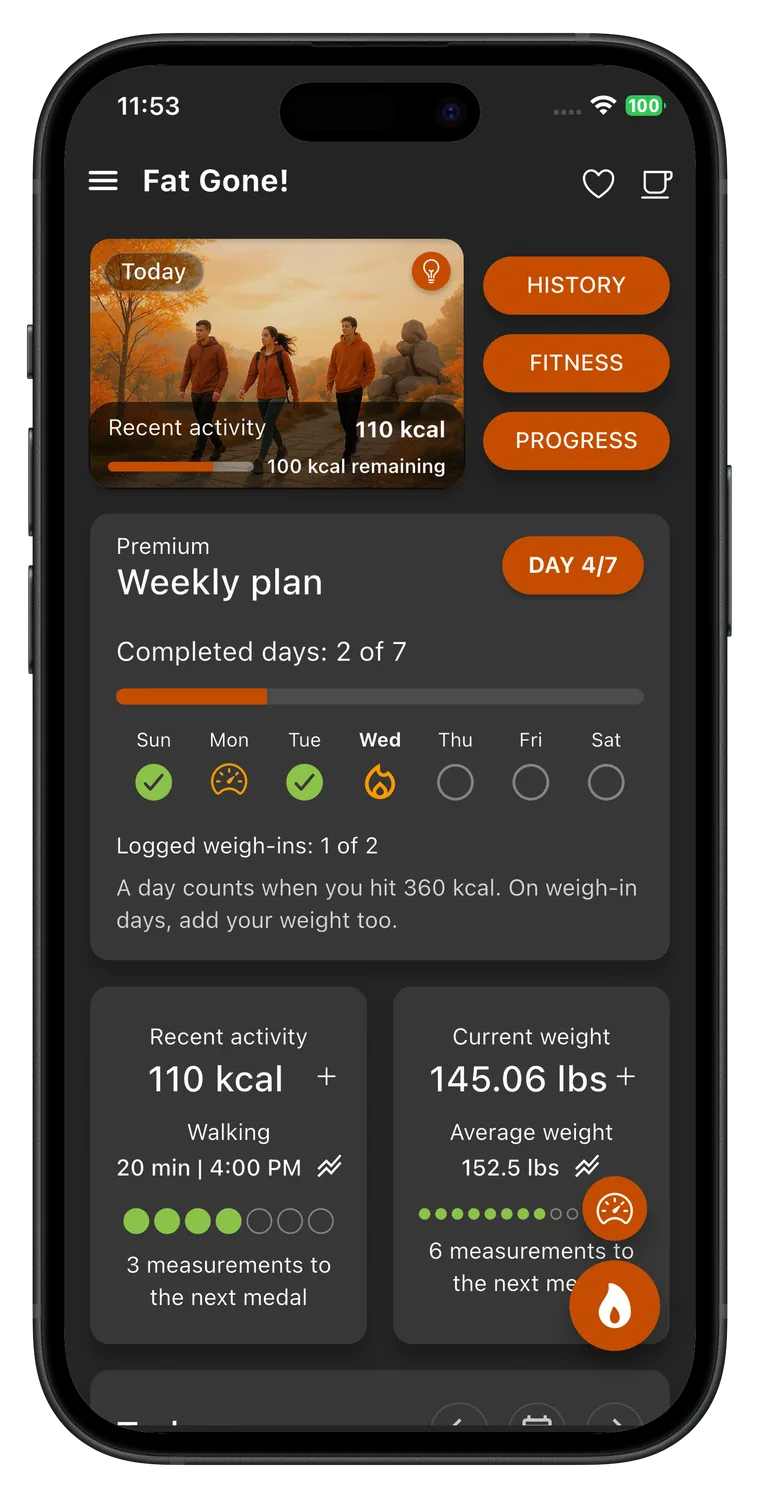
Put the idea into practice
Fat Gone includes a personalized activity plan and records of completed activities. Use its proposed schedule as a plan to review against your circumstances, then log what you do. Some planning and adaptation features depend on the app version and access level; this guide does not promise that every feature is free.


Sources and editorial scope
These guides explain activity planning and the app’s estimates. CreamSoft checked product details against the app source on 1 October 2026. They are not a medical review or an individual exercise prescription. Linked research and official guidance provide context; examples are illustrative.